
You've probably heard it a thousand times: "Jesus died for your sins."
But have you ever stopped long enough to let those words hit you?
We say it so often in church, in worship songs, in casual conversation, that I wonder if we've lost the weight of what actually happened. We've turned the most expensive transaction in the history of the universe into a bumper sticker.
The Contract You Already Broke
Have you ever signed a contract? A lease. A phone plan. A loan agreement.
You read the terms. You understood the conditions. You signed on the dotted line. And that signature meant something. You agreed to uphold your end of the deal.
God gave humanity a contract too. We call it the Old Covenant, the law given through Moses on Mount Sinai. It set God's perfect standard for how to live. And the terms were clear: obey, and live. Disobey, and die.
There was just one problem.
Romans 3:20
We never had a chance.
The Mirror That Couldn't Wash Your Face
Ryan shared a powerful analogy in this episode that stopped me in my tracks:
That's what the law was. A perfect mirror.
Paul tells us in Romans that the law is holy, righteous, and good. There was nothing wrong with the mirror. The problem was the dirt it revealed in us.
The Old Covenant set God's perfect standard, but it didn't give us the power to meet it.
So there we stood. Dirty. Exposed. Condemned. The mirror showed us everything wrong, but offered no solution. We had signed a contract we could never fulfill, and the penalty clause was non-negotiable: Death.
The Price Tag on Your Soul
So what does it cost to pay off an infinite debt of sin against an infinite God?
Not good behavior. Not religious rituals. Not the blood of animals, which Hebrews tells us could never truly take away sins anyway.
It cost blood. Divine blood. The blood of God's own Son.
Hebrews 9:22
Think about the Last Supper for a moment. Jesus is sitting with His closest friends. He takes a cup of wine, looks at them, and says:
"This cup that is poured out for you is the new covenant in my blood."
The next day, those words stopped being symbolic.
The blood of God's own Son became the signature on a new contract. The penalty for every broken promise, every act of rebellion, every sin you've committed and every sin you will commit was paid in full.
Jesus had to die for the blessings of forgiveness, the Holy Spirit, and eternal life to be released to us, the beneficiaries.
What the Blood Actually Bought You
The new covenant wasn't just about wiping the slate clean. It purchased three things that change everything:
Total Forgiveness
Not partial. Not conditional. Not "as long as you're good enough."
Your past sins? Nailed to the cross.
Your present sins? Nailed to the cross.
Your future sins? Already nailed to the cross.
Jeremiah 31:34
This is why holding onto guilt after you've repented is so dangerous. When you keep beating yourself up for sins God has already forgotten, you're essentially saying the cross wasn't enough. That's the enemy whispering lies, not the Spirit speaking truth.
The Holy Spirit
Remember Jeremiah's prophecy? God said He would write His law on our hearts, not on stone tablets. Through the new covenant, God gives us the Holy Spirit.
This is what changes you from the inside out. It's not about white-knuckling your way to obedience. It's about a new nature that wants to obey, not out of fear, but out of love and gratitude.
Taylor described it perfectly:
This is why newly saved believers are so on fire. They've tasted something the world can't offer. And yes, that passion can be maintained. It doesn't have to be just a "honeymoon phase."
Direct Access to God
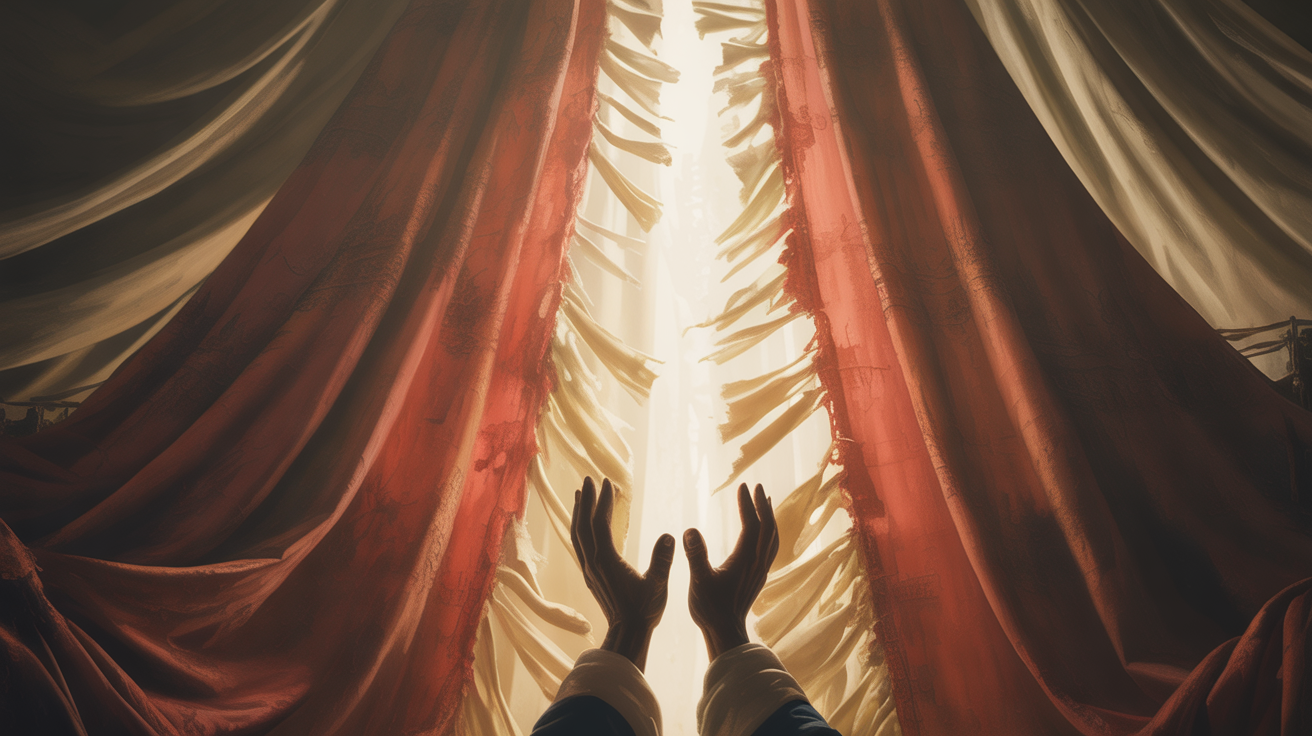
In the Old Testament, God's presence dwelt in the Most Holy Place, behind a thick veil in the temple. Only the high priest could enter, and only once a year, with blood. That veil was a constant reminder: sin separates you from God.
But the moment Jesus died, the Gospel tells us that veil was torn in two, from top to bottom. Not from bottom to top (as if man did it), but from top to bottom. God Himself ripped open the barrier.
Hebrews 10:19, 22
You don't need a priest anymore. You don't need to go through rituals. You can walk directly into the presence of the Creator of the universe, anytime, anywhere, because the blood of Jesus is your access pass.
The Question That Changes Everything
So here's the question that should stop you in your tracks:
If grace cost God everything, how can we treat it like it costs us nothing?
This is why forgiveness isn't optional for the believer.
You were forgiven an infinite debt, sins against an infinite God, paid for by infinite blood. And God asks one thing in return: forgive others.
Not because they deserve it. Not because it's easy. Not because they apologized.
But because you were forgiven when you didn't deserve it. When it wasn't easy. When you hadn't apologized.
Romans 5:8
He didn't wait for you to clean up. He didn't wait for you to apologize. He didn't wait for you to be worthy.
He died while you were still His enemy.
You Are Worthy Because He Says So
The title of this episode asks a question many of us wrestle with: Am I worthy?
And the biblical answer might surprise you.
On your own merit? No. None of us are.
But that was never the point.
Ephesians 2:8-9
Your worthiness is not based on your performance. It's based on His payment.
The moment you try to earn grace, it stops being grace. The moment you think you can add to what Jesus did, you diminish it. The moment you believe your good works make you more acceptable to God, you've missed the entire gospel.
You are worthy because the One who paid for you says you're worth dying for.
End of discussion.
Living in Light of Infinite Worth
As Ryan said at the close of this episode:
The proper response to grace isn't guilt. It isn't striving. It isn't trying harder.
It's overwhelming gratitude.
It's waking up every day amazed that the God of the universe would give His Son for you. It's living your life in light of what that sacrifice actually means. It's forgiving others freely, not because they earned it, but because you didn't either.
The most expensive gift ever given is already yours.
All He asks is that you receive it.
Frequently Asked Questions
What is the difference between the Old Covenant and New Covenant?
The Old Covenant (the law given through Moses) set God's perfect standard but couldn't give us the power to meet it, like a mirror that shows dirt but can't wash your face. The New Covenant, established through Jesus's blood, provides what the old couldn't: total forgiveness, the Holy Spirit who transforms us from within, and direct access to God. The old exposed our sin; the new removes it.
Why did Jesus have to die? Couldn't God just forgive us?
God is both perfectly loving AND perfectly just. His justice required that sin be paid for, "the wages of sin is death" (Romans 6:23). God couldn't simply ignore sin without violating His own nature. So instead of demanding payment from us (which would mean our eternal death), He paid it Himself through Jesus. The cross is where God's justice and mercy meet: justice was satisfied, and mercy was extended.
If I'm already forgiven, does it matter how I live?
Grace isn't a license to sin, it's the power to live differently. When you truly understand what Jesus did for you, your response isn't "I can do whatever I want." It's overwhelming gratitude that produces genuine transformation. The Holy Spirit gives you new desires. You WANT to honor God, not out of fear or obligation, but out of love for the One who died for you.
How does the cost of grace relate to forgiving others?
Jesus told a parable about a servant forgiven millions who refused to forgive someone who owed him pennies. The point is clear: whatever anyone has done to you is infinitely smaller than what you've done against God, and He forgave you anyway. When you hold bitterness, you're essentially saying, "God, I'll accept Your forgiveness for my infinite debt, but I refuse to extend forgiveness for this smaller offense." The cost of grace demands we forgive as we've been forgiven.
What does it mean that the veil was torn?
In the Old Testament temple, a thick veil separated the Holy Place from the Most Holy Place where God's presence dwelt. Only the high priest could enter, once a year. This veil represented the barrier between sinful humanity and holy God. When Jesus died, that veil was supernaturally torn from top to bottom, God Himself removing the barrier. Now, through Jesus's blood, every believer has direct, confident access to God's presence anytime.
Listen to the Full Episode
This article is based on: Am I Worthy? The Cost of Our Grace
Watch on YouTubeWant More Biblical Insights?
Subscribe to our newsletter and never miss a new article or episode.
Subscribe Now